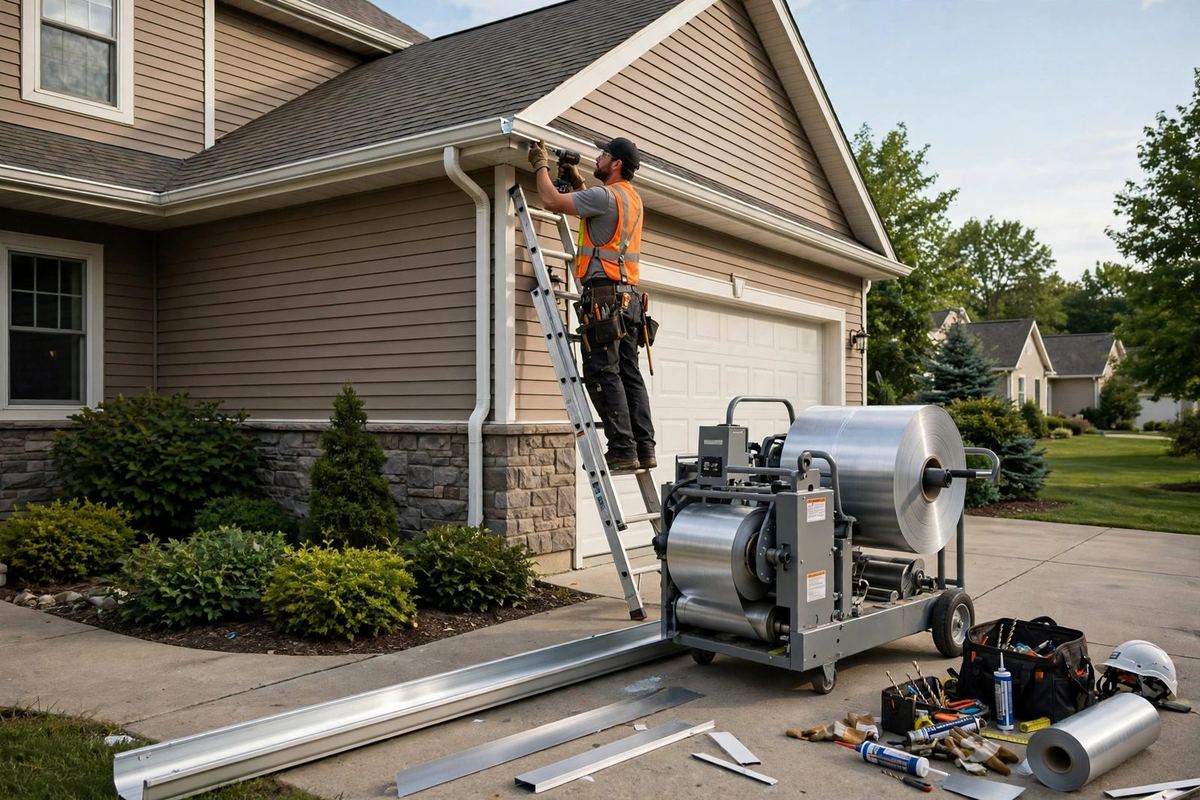
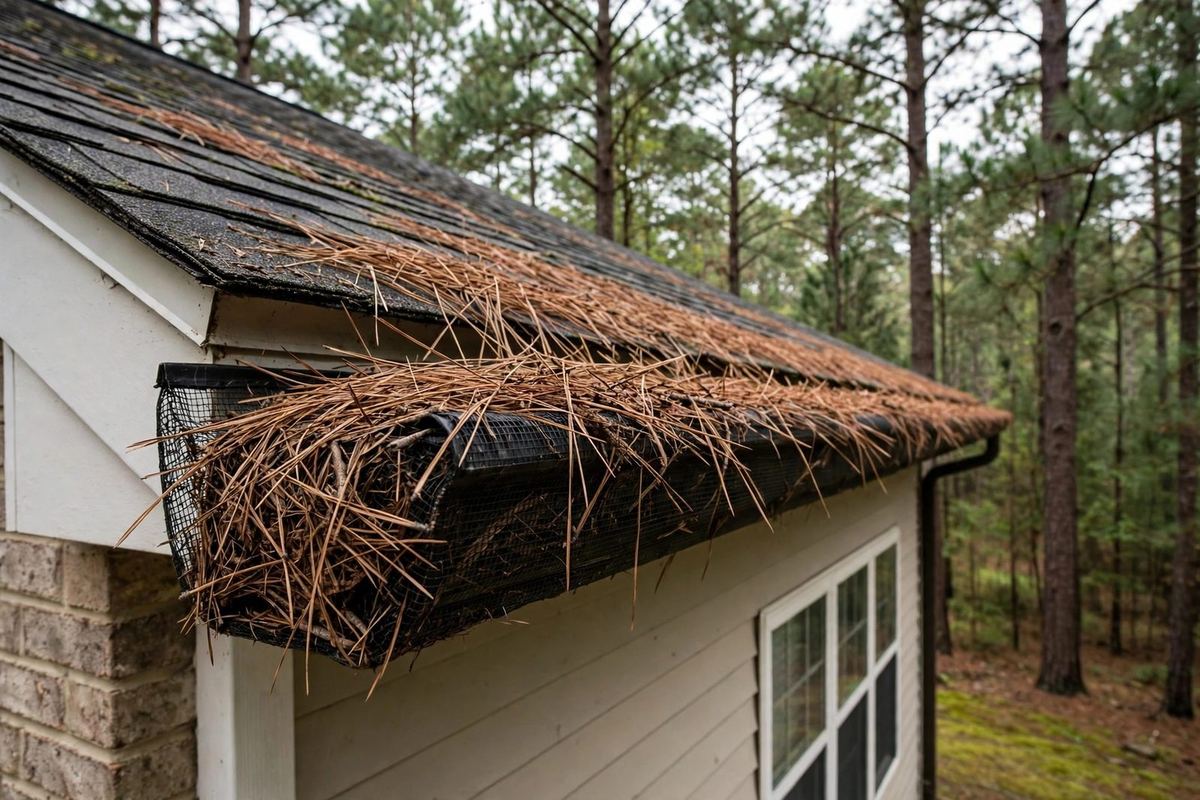
The honest sizing question is not what looks right but what a Marietta cloudburst delivers per minute onto your roof. Large roof planes and steep pitches accelerate water, and a 5-inch gutter with one downspout can be overwhelmed on a big two-story East Cobb home where a 6-inch system with adequate downspouts cruises. Six-inch gutters move substantially more water, and their larger downspouts clog less with the local mix of pine straw and seed pods. We calculate drainage areas and size accordingly.
Downspouts are half the system, and the half most often shortchanged. We size downspouts to the gutter — larger 3-by-4-inch downspouts pair with 6-inch gutters — place them where roof drainage and yard drainage both make sense, secure them properly to the wall, and discharge water away from the foundation with extensions or splash blocks. A downspout that dumps against the foundation has moved the problem, not solved it. Where underground drains exist, we confirm the downspout actually connects and flows before buttoning up.
Gutters are only as sound as what they hang from, so we inspect fascia boards first — mounting new gutters to rotted fascia guarantees early failure, and any needed fascia work is quoted openly as part of our soffit and fascia service. Runs are pitched subtly toward downspouts: enough to drain fully, not enough to look crooked. Hangers are spaced to carry the weight of water-loaded debris between cleanings, a real load under Marietta's oaks and pines, and corners are sealed and riveted to stay that way.